Last Updated on September 28, 2026 by Yatrapur
The Ambubachi Mela is a Hindu festival celebrated every year at the Kamakhya Temple in Guwahati, Assam. This festival is celebrated every year in the month of June. This time matches with the arrival of the monsoon season.
It is celebrated to mark the annual menstruation cycle of Goddess Kamakhya. Furthermore, the festival honours the divine feminine power of Mother Kamakhya Devi, who is the ultimate source of creation and fertility. In practical terms, Ambubachi Mela is associated with the earth and agriculture, comparing Mother Earth to a fertile woman.
- Location: Kamakhya Temple, Nilachal Hills, Guwahati (Assam, India)
- Time: Mid-June (The Assamese month of ‘Ashadh’)
- Duration: Four days; the temple remains closed for three days and reopens on the fourth day.
- Frequency: Annual
- Main Deity: Goddess Kamakhya (An embodiment of Shakti)
The Legend of Kamakhya Temple
The Kamakhya Temple is worshipped as one of the 51 Shakti Peethas. This is a very powerful temple dedicated to the goddess. Because of this, it is highly popular among Tantrics, Aghoris, Sadhus/Sadhvis, ascetics, and devotees of the goddess. Every year, millions to tens of millions of devotees visit.
According to religious beliefs, Kamakhya Temple has a deep connection with Goddess Sati. Legend says that Lord Vishnu used his Sudarshan Chakra (divine disc) to cut Goddess Sati’s body into 51 pieces. Her Yoni (female organ) fell right here on the Nilachal Hills.
Inside the main sanctum of the temple, there is no statue or idol of the goddess. Instead, there is a stone yoni (female genitalia) with a natural spring of water flowing over it continuously. This temple is a major centre for Tantric Shaktism worship.
What Happens During the Festival
During the festival, the temple stays closed for three days. Devotees believe that the Goddess rests during her annual menstruation period at this time. To show respect, people stop all farming activities and religious rituals.
On the fourth day, the priests perform cleaning rituals. They give the goddess a holy bath according to sacred rules. After that, the temple opens again with prayers, chants, and happy celebrations.
Priests give two types of prasad (holy offerings) to the people. The first is Angodak, which is the water from the holy spring. The second is Angavastra, which is a piece of red cloth that covered the stone Yoni.
Why the Ambubachi Mela is Special
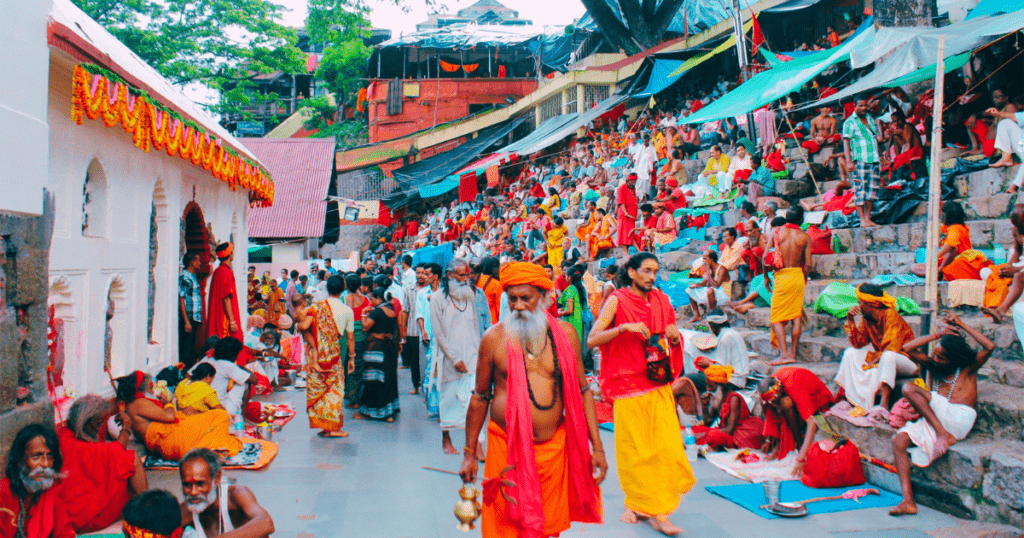
The Ambubachi Mela is often called the “Mahakumbh of the East”. This is because it attracts huge crowds of pilgrims, Sadhus (holy men), and Tantric practitioners.
It is one of the few festivals in the world that celebrates menstruation. Instead of treating it as unclean, the festival sees it as holy and divine. It shows great respect for female power and natural cycles. Stopping farming work also shows respect for the Earth’s fertility.
The festival brings visitors from all over India and other countries. This turns the city of Guwahati into a busy pilgrimage spot. The Assam government and the temple trust set up camps, clean toilets, and medical help for everyone.
Beyond religion, the mela is a great cultural platform for Assam. It sends a strong message of honouring women. It also thanks Goddess Kamakhya and Mother Earth for their power to create life.
Most popular links:
Social Media: Instagram | x.com